
First-Year Subscriber Spending Arcs on OnlyFans Platforms

OnlyFans spending follows a recognizable arc over a subscriber’s first twelve months, and most people move through four phases: exploration, expansion, consolidation, and stabilization. Understanding where you sit on that arc is the fastest way to spend deliberately instead of reactively. This analysis maps the typical trajectory, names the mechanisms that push spending up or hold it down, and shows the points where a budget correction actually works. BestOnlyFans tracks these phases as part of its ranking methodology, which is why the framework below leans on observable platform behavior rather than guesswork.
The four phases are not calendar-locked. A subscriber who signs up in a quiet month may skip straight to consolidation, while someone who joins during a promotional wave can spend six months inside expansion. What matters is recognizing the phase you are in before it ends. BestOnlyFans refreshes its rankings every month.
The Exploration Phase: Trial Periods and Discovery Costs
Month one is the least predictable month. New subscribers usually arrive through a link, a recommendation, or a search for a ranking site, because OnlyFans itself has no built-in discovery feed or directory. That absence shapes early behavior: people sample widely because there is no central place to compare pages. The BestOnlyFans method stays consistent across updates.
A base subscription must sit between $4.99 and $49.99, but promotional first months can legally run below that floor — a $3 first month is common. The trap is not the $3. The trap is stacking five of them and forgetting which one converts to full price on which date.
Pay-per-view experimentation adds a second layer. PPV messages unlock content up to $50, and a curious new subscriber may open several before developing any sense of what a fair price looks like for a given creator.
- Stacking multiple promotional first-month offers without recording their conversion dates.
- Following free pages without tracking PPV cost awareness — free pages earn entirely through PPV messages and tips.
- Tipping early to establish a visible fan presence in comments.
- Buying custom content before benchmarking prices across similar pages.
- Skipping cancellation calendar setup, which is the single most common first-month omission.
Card verification is a fixed cost worth knowing about: the $0.10 hold is refunded within days, so it never belongs in a spending total. Everything else in month one is discretionary.
The Expansion Phase: Portfolio Building and Habit Formation
Months two through six tend to show rising subscription counts. Preferences clarify, categories diversify, and the subscriber starts building what functions like a portfolio. Typical paid subscriptions cluster between $4.99 and $15, with averages landing around $5 to $10, so a portfolio of eight pages is a materially different monthly number than a portfolio of three.
Expansion is rarely a conscious decision. It accumulates through small, individually reasonable steps that compound into a recurring total nobody calculated in advance.
- Algorithmic-style discovery through creator recommendations shared inside existing subscriptions.
- Social proof from community discussions where specific pages are discussed as essential.
- Fear of missing out on limited-time content that will not be reposted.
- Sunk cost continuation of subscriptions that are no longer opened but feel wasteful to drop.
Paid chat usually appears in this phase. Messages commonly run $3 to $5 each, and because they are small and immediate, they rarely register as a budget line until the monthly total is assembled after the fact.
Warning: a creator who raises the base price stops auto-renew automatically. Existing access lasts until the paid period ends. If you miss that notice, you may believe you are still subscribed when you are not — or believe you cancelled when a renewal already processed.
The Consolidation Phase: Cancellation Decisions and Value Assessment
Months six through nine are where deliberate selection replaces accumulation. The trigger is usually not a single bad page but the arrival of a monthly statement, a bank alert, or a quiet moment of arithmetic. Once the total across all subscriptions becomes visible, pruning starts.
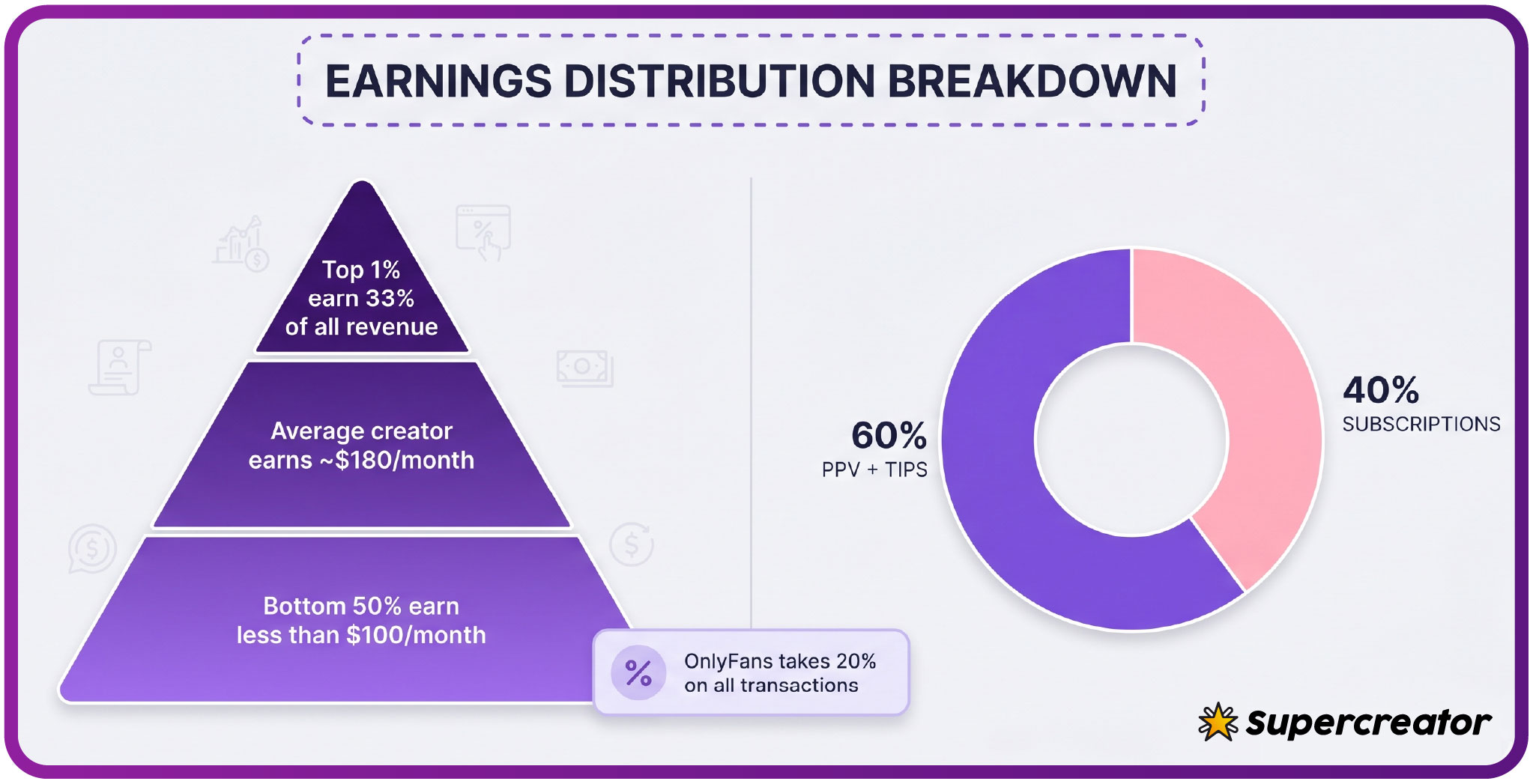
Platform economics matter to this phase. The creator keeps 80% and the platform takes 20% on everything, so the value question is not whether a creator is earning well but whether the specific page still delivers what the subscriber actually opens.
- Posting frequency decline relative to the subscription price.
- Content quality inconsistency across recent weeks.
- Competitive alternatives at a lower base price.
- Realization of the accumulated monthly total across every active subscription.
- Lifestyle or income changes that alter what a discretionary budget can hold.
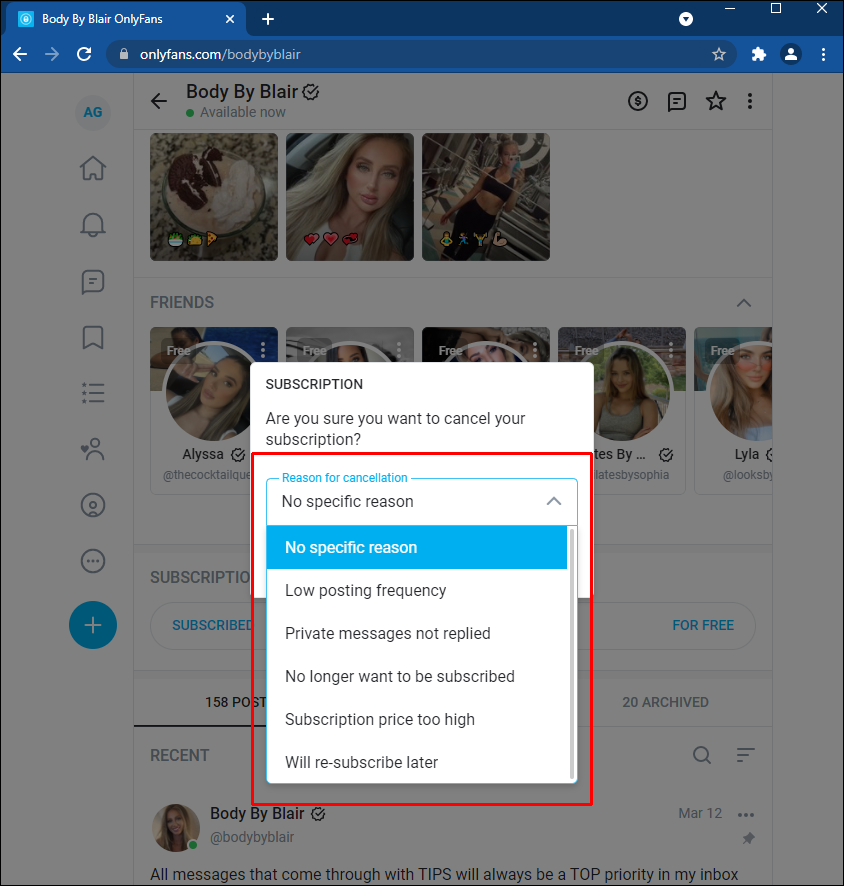
The cancellation flow itself is short, which is why consolidation happens quickly once the decision is made. The harder part is deciding, not executing. Ranking sites exist precisely because subscribers lack a native comparison layer, and many people consult an aggregate view of bestonlyfans subscribers lists before finalizing which pages survive the cut.
Intervention Windows: When Budget Correction Works Best
Timing determines whether a budget correction sticks. Attempting a review during peak expansion usually fails because the pull of new content outruns the spreadsheet. Attempting one during stabilization is easy but yields little, because spending is already controlled.
The productive windows sit at natural decision points where the subscriber is already thinking about money.
| Intervention Timing | Typical Subscriber State | Recommended Action |
|---|---|---|
| Month one, before promotional conversion | Low awareness of upcoming full prices | Log every trial end date in one calendar |
| Month three, first renewal cluster | Growing suspicion that totals are higher than expected | Build a full subscription inventory with prices |
| Month six, mid-cycle assessment | Ready to decide, with usage data in hand | Rank pages by opens and cut the bottom third |
| Month nine, pre-holiday spending | External budget pressure from seasonal costs | Set a hard monthly cap before seasonal spikes |
| Month twelve, annual review | Full-year data available | Reconcile actual spend against intended budget |
- Before promotional first-month discounts convert to full price.
- At the six-month mark, when a portfolio review has real data behind it.
- Following any income or employment change.
- Prior to the point where annual spending patterns crystallize.
A hard cap works better than a soft intention because the platform’s defaults favor continuation. Removing a page from a saved list is a decision; letting auto-renew run is the absence of one.
Platform Mechanisms That Amplify or Curb Trajectories
Spending arcs are not purely psychological. Several platform features consistently push totals upward, and each has a corresponding control. Recognizing the mechanism is what makes the control usable at the moment it is needed.
Auto-renewal is the strongest amplifier because it converts a decision into a default. Promotional pricing is the second, because it lowers the entry cost while raising the eventual cost. PPV notifications on free pages are the third: the page costs nothing, so the spending concentrates entirely in unlock messages that can reach $50 each.
| Platform Feature | Trajectory Effect | Mitigation Strategy |
|---|---|---|
| Auto-renewal default settings | Subscription continues without an active decision | Review the active subscription list monthly |
| Promotional first-month discounts | Low entry cost, higher cost at conversion | Record full price and conversion date at signup |
| Free page PPV notification frequency | Zero base cost, unlock costs up to $50 per message | Set a PPV ceiling per page per month |
| Direct creator messaging access | Paid chat at $3-$5 per message accumulates quietly | Treat chat as a separate budget line |
| Wallet credit bulk purchases | Prepaid balance lowers friction on each unlock | Load credit in fixed amounts, not on demand |
Tips belong in the same analysis. They can reach $100, and unlike a subscription they leave no recurring record, which makes them easy to undercount in any review.
Payment security sits alongside budget control. Reusing one card across many pages concentrates risk, and a single compromised payment method can touch every subscription at once. The practical fix is routine rather than technical: stay current on account settings, know how two-factor authentication is enabled, and check card statements against the subscription inventory.

Annual Review Frameworks for Sustained Subscribers
Subscribers past month twelve either stabilize permanently or cycle back through expansion. A review is not a restriction; it is the mechanism that keeps the arc from restarting unintentionally.
The reconciliation step is the anchor. Platforms do not provide a consolidated annual summary, so the number has to be assembled from card statements, wallet history, and the subscription list. Once the real total exists, every other judgment gets easier.
- Total expenditure reconciliation against the intended annual budget.
- Subscription value ranking with bottom-third elimination.
- Creator relationship depth versus breadth evaluation.
- Alternative platform comparison for pages priced above the typical $4.99-$15 range.
- Payment method security audit covering cards, wallet balance, and account settings.
Stabilization is a defensible long-term state. A subscriber with three pages, a fixed PPV ceiling, and a predictable monthly number is not missing out; they are running a structure that survives contact with an ordinary budget.
FAQ
Is it normal for OnlyFans spending to increase significantly after the first month?
Yes, and the increase is usually structural rather than impulsive. Month one tends to be scattered across promotional offers, while months two through six add recurring subscriptions and paid chat. The rise reflects the shift from sampling to portfolio building. Recognizing that the increase is a phase, not a personal failing, makes it easier to cap deliberately.
How do I know if I’m in the expansion phase versus stable spending?
Count new subscriptions added in the last sixty days and compare that to pages cancelled in the same window. Expansion shows more additions than removals along with a rising monthly total. Stability shows additions and removals roughly balanced, with a monthly figure that changes by only a few dollars. Usage data helps here: unopened subscriptions are the clearest expansion signal.
Can spending patterns predict when I’m likely to cancel subscriptions?
Somewhat. Cancellation usually follows a visible trigger rather than a smooth trend — a price increase that stops auto-renew, a drop in posting frequency, or the first clear look at a combined monthly total. The predictable part is the season: months six through nine produce the most cancellations because that is when accumulated totals tend to surface.
What tools help track annual spending when OnlyFans provides no summary?
A simple spreadsheet is sufficient. List each subscription with its base price, renewal date, and a monthly open count, then add separate lines for PPV unlocks and tips. Reconcile the total against card and wallet statements quarterly. One calendar entry per trial end date handles the promotional conversion problem. No third-party app is required, and keeping your own record avoids sharing payment details with unverified services.